A sharper focus
specifically on intimate-partner violence.
A community mobilisation approach to prevent violence against women by transforming power imbalances between women and men.

Credit: Raising Voices.
What these case studies show
These case studies illustrate how practice-based knowledge (PbK) is used in real world settings to improve childhood sexual violence prevention and response. Each case focuses on what practitioners or survivor-led groups learned through action, reflection, and decision-making in their own contexts, and how that knowledge was taken forward.
What these case studies do and do not do
The case studies do not aim to produce generalisable findings. Instead, they offer context-specific insight into how practice unfolds, where challenges emerge, and how actors respond in real time. The absence of evaluation or impact data should not be interpreted as evidence for or against effectiveness.
How to use these insights in your own work
These case studies are intended to support reflection rather than replication. Readers may find them useful for:
Ethical use and limitations
Documenting and sharing PbK requires careful attention to safety, consent, power, and potential harm, particularly when engaging with sensitive experiences of child sexual violence. The ethical principles guiding this work are set out in the PbK Guidance Framework
Scope and limits of the knowledge shared
Each case study reflects the type and depth of knowledge available within its context. Differences in format, detail, and focus reflect variation in purpose, access, and the conditions under which knowledge was documented and shared.
Content warning
Some of the case studies include details of childhood sexual violence. Each case study includes specific content notes to support informed engagement. Please take care of your well-being as you read and step away if needed. For additional support, you may find it helpful to consult the following resources:
Credit: Raising Voices
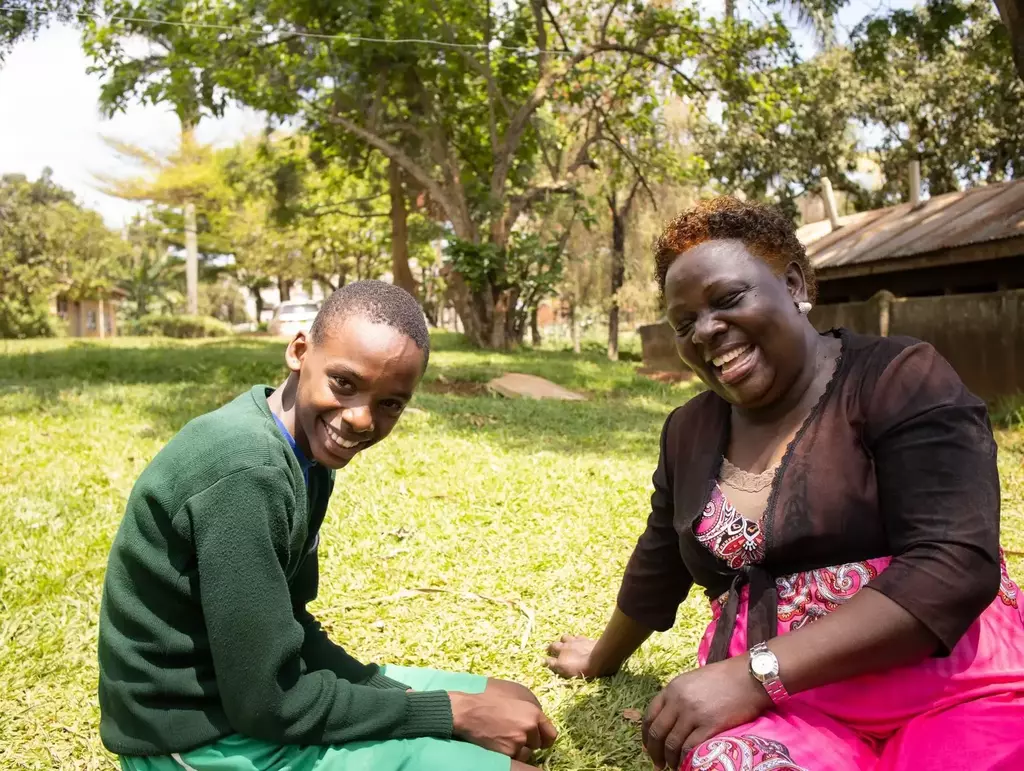
The original SASA! Activist Kit was developed in Uganda in 2008 by Raising Voices. It is a community mobilisation approach to prevent violence against women by transforming power imbalances between women and men. The SASA! study demonstrated the programme’s impact on reducing women’s risk of intimate partner violence (IPV), and in the following decade, it was adopted by more than 65 organisations in over 25 countries. As the programme expanded to diverse contexts, Raising Voices recognised the need to revise the intervention to better reflect accumulated learning as well as evolving priorities in the broader field. This led to the creation of SASA! Together, a refined version that systematically integrated over a decade of Raising Voices’ practice-based learning, partner feedback, and research-based insights.

Credit: Raising Voices.
Raising Voices has been leading on advocacy to elevate practice-based learning since 2014. The SASA! revision process provided another opportunity to put this organisational priority into practice. They developed a structured approach to integrate experiential learning, emerging best practice and new evidence on what works to prevent violence against women. This iterative process included workshops to synthesise internal learning, extensive consultation with partners and experts, content development, review and testing, final refinements and production. By combining grounded expertise, expert feedback and research, the updated programme was both evidence-informed and rooted in lived practice.
What was learned from PbK

Credit: Raising Voices, The SASA! Story.
specifically on intimate-partner violence.
for practitioners through in-depth practical guidance to implement and learn from their programming.
for example, through a focus on relationship values and engagement of religious leaders.
and enhancements providing more potential for impact at scale.
Integrating PbK within the academic knowledge-base
The multi-step approach used to revise SASA! was later recognised in the academic sphere, with its process and insights published in the Journal of Evaluation and Program Planning. This shows how PbK can not only refine interventions in real-time, but also meaningfully contribute to academic knowledge and evidence base.
Why this matters: The value of PbK
The SASA! Together revision process demonstrates that expanding and scaling is not just about reaching more people — it is about doing so without losing impact, trust, or ethical integrity. By integrating PbK, Raising Voices ensured that as the program is implemented in diverse contexts, it remains relevant and grounded in the expertise of how to ensure quality and impact. PbK has the potential to strengthen scaling processes by revealing the practical dynamics that determine whether an intervention thrives across contexts.

The SASA! Approach for Preventing Violence against Women and HIV. Credit: Raising Voices.
[1] Michau, L., & Namy, S. (2021). SASA! Together: An evolution of the SASA! Approach to prevent violence against women. Evaluation and Program Planning, 86, 101918. https://doi.org/10.1016/j.evalprogplan.2021.101918
[2] Kyegombe, N., Abramsky, T., Devries, K. M., Michau, L., Nakuti, J., Starmann, E., Musuya, T., Heise, L., & Watts, C. (2015). What is the potential for interventions designed to prevent violence against women to reduce children’s exposure to violence? Findings from the SASA! study, Kampala, Uganda. Child Abuse & Neglect, 50, 128-140. https://doi.org/10.1016/j.chiabu.2015.10.003.
[3] Raising Voices. (2022). Nurturing and elevating practice-based learning: Learning from practice series No. 8: Organizational perspectives. https://raisingvoices.org/wp-content/uploads/2022/11/Learning-from-practice-No-8_final.pdf
Do you have a experience with the programs on this website, or any other interventions that aim to address or reduce childhood sexual violence?
Whether you're a advocate, activist, implementer or a participant of a program, we'd love to hear from you!