Sacred Spaces
Sacred Spaces supports Jewish institutions to strengthen safeguarding by grounding prevention in Jewish ethical and theological frameworks. Drawing on practice-based knowledge and other forms of expertise, Sacred Spaces identifies gaps and develops approaches that are refined in real-world settings.
Note on the practice-based knowledge case studies
What these case studies show
These case studies illustrate how practice-based knowledge (PbK) is used in real world settings to improve childhood sexual violence prevention and response. Each case focuses on what practitioners or survivor-led groups learned through action, reflection, and decision-making in their own contexts, and how that knowledge was taken forward.
What these case studies do and do not do
The case studies do not aim to produce generalisable findings. Instead, they offer context-specific insight into how practice unfolds, where challenges emerge, and how actors respond in real time. The absence of evaluation or impact data should not be interpreted as evidence for or against effectiveness.
How to use these insights in your own work
These case studies are intended to support reflection rather than replication. Readers may find them useful for:
- identifying questions to explore within their own practice
- recognising patterns or tensions that resonate with their own settings
- anticipating practical, ethical, or institutional challenges before they arise
Ethical use and limitations
Documenting and sharing PbK requires careful attention to safety, consent, power, and potential harm, particularly when engaging with sensitive experiences of child sexual violence. The ethical principles guiding this work are set out in the PbK Guidance Framework
Scope and limits of the knowledge shared
Each case study reflects the type and depth of knowledge available within its context. Differences in format, detail, and focus reflect variation in purpose, access, and the conditions under which knowledge was documented and shared.
Content warning
Some of the case studies include details of childhood sexual violence. Each case study includes specific content notes to support informed engagement. Please take care of your well-being as you read and step away if needed. For additional support, you may find it helpful to consult the following resources:
- Brave Movement, Practicing Self-Care
- Sexual Violence Research Initiative (SVRI) Dare to Care: Wellness, self and collective care for those working in the Violence against Women (VAW) and Violence against children (VAC) fields
Context
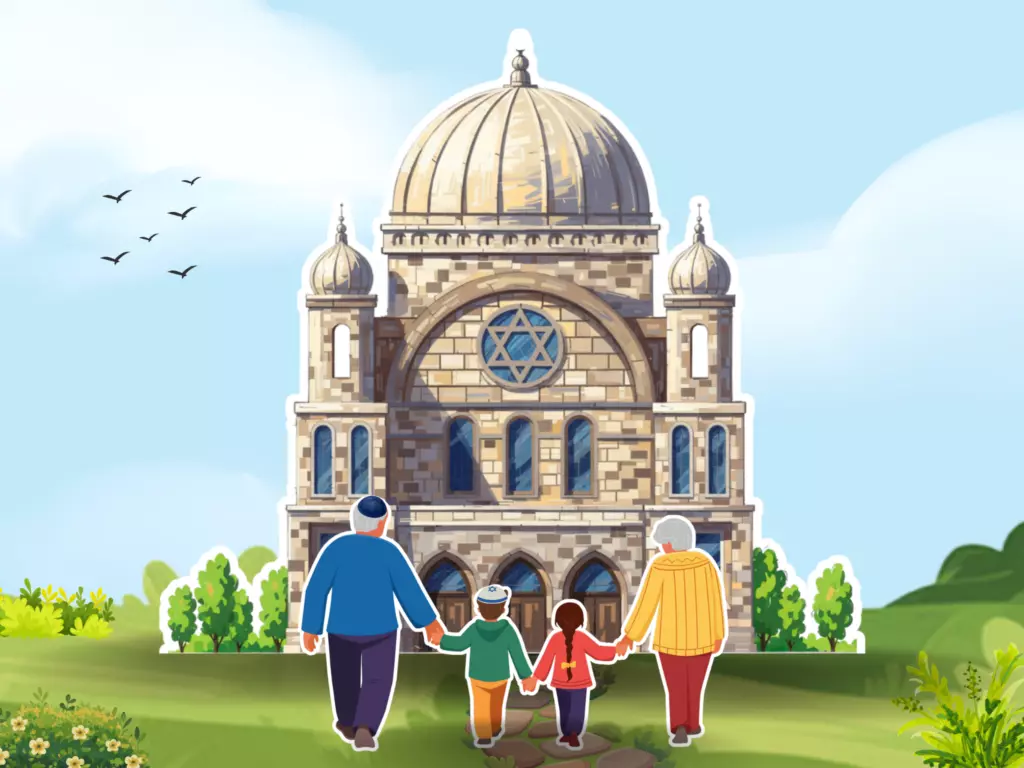
Sacred Spaces works across the United States to prevent and respond to abuse within Jewish institutions (including childhood sexual violence), grounded in Jewish theological frameworks.
Its work emerged in response to a clear gap: there was no consistent, system-wide approach to safeguarding across Jewish institutions. Jewish institutions operate independently, resulting in wide variation in how abuse is prevented and addressed. Some institutions struggle to respond effectively, with decisions shaped by internal pressures and concerns about reputation.

Sacred Spaces helped promote the understanding of safeguarding as a shared responsibility across leadership, staff, and community members.
Sacred Spaces was founded on the premise that this fragmentation could be addressed by building shared safeguarding standards (similar to fire safety standards) to keep children safe, while still preserving institutional autonomy. It works to shift safeguarding from isolated incidents to being a core religious and communal responsibility. At the same time, Sacred Spaces’ approach reinforces that safeguarding within faith institutions must align with legal obligations and cannot be addressed solely through internal or religious processes.
Sources of Practice-based Knowledge
The learning informing this case study, including practice-based knowledge, emerged over more than a decade through sustained engagement with Jewish institutions, including:
- Frontline experience within Jewish institutions, including the founder’s work as a synagogue youth consultant, revealing how authority and informal norms shape risk. For example, a welcoming house of worship often provides a sense of community while allowing broad access to children with minimal oversight.
- Learning from theology, including Jewish law, rabbinic sources, and religious authorities, especially as they intersect with safeguarding issues. For example, learning that reporting child abuse does not violate religious prohibitions regarding slander, rather it is a religious imperative to protect a child’s life.
- Learning from existing safeguarding frameworks around the world, such as the guidelines on Making institutions child safe developed by the Australian Royal Commission into Institutional Responses to Child Sexual Abuse.
- Learning from the implementation of safeguarding policies and tools, including ongoing cycles of reflection and adjustment with organisations on the frontline.
- Case consultations with institutions navigating cases of childhood sexual violence, revealing how leaders make decisions on reporting, communication, and response under pressure, and where gaps in guidance or systems lead to failure.
- Learning from other faith contexts, including from close partnerships with Christian institutions, to understand how they were responding to childhood sexual violence.
What was learnt from Practice-based Knowledge
Sacred Spaces’ work surfaced a set of grounded insights about how childhood sexual violence occurs, how institutions respond, and what effective safeguarding requires in faith-based contexts.
- Institutional responses can compound harm when systems are unclear: Institutional responses, including denial, silence, or poorly handled communication, can deepen harm. Sacred Spaces also learned that inadequate responses often resulted from a lack of guidance, not bad intent. Leaders were navigating legal, ethical, and community pressures without clear standards or practical safeguarding tools.
- Internal religious processes can unintentionally delay protection: Sacred Spaces observed that some institutions attempted to manage concerns internally or delayed engagement with secular authorities due to fears about slander, reputational harm, or misunderstanding of religious obligations. This created additional risks for children and weakened accountability.

Sacred Spaces supports institutions to recognise when reporting is required and to engage appropriately with secular authorities.
- Secular safeguarding frameworks do not automatically translate into prevention: Standard prevention frameworks and legal reporting obligations did not translate easily into Jewish institutional contexts, where authority, relationships, and decision-making function differently. They learnt that prevention must be rooted in the community’s ethical, cultural, and theological frameworks. This connects with research from Israeli ultra-orthodox Jewish communities, where religious leaders described navigating “countless considerations” related to religious obligations and community implications.[i]
- Informal trust-based cultures can unintentionally increase risk: Sacred Spaces observed that highly relational faith environments often normalised broad adult access to children and relied heavily on assumptions of trustworthiness. This sometimes made grooming behaviours harder to identify, particularly when individuals were viewed as especially pious, generous, or community-oriented. Leaders often struggled to reconcile allegations with their existing trust in respected figures, especially where authority, piety, or communal standing shaped perceptions of credibility.
- Governance structures shape risk: The decentralised nature of Jewish institutions creates variability and safeguarding risks. Unlike in some other faiths, where institutions are subject to a central authority, institutions in this faith largely act independently. Safeguarding must therefore be built institution by institution.

Where safeguarding was previously informal or absent, institutions are now establishing child protection policies, reporting pathways, and governance structures.
- Grounding prevention in religious texts increases willingness to engage. Sacred Spaces found that some institutional leaders were more receptive to safeguarding when it was framed through Jewish texts and halakhic principles (the rules and values that guide how Jewish life is lived) rather than through external compliance language.
- Representation and cultural alignment shape engagement: The Jewish community is not monolithic and has significant variation across communities in terms of beliefs, practices, and social norms. When institutions do not see themselves in safeguarding content, they disengage. Materials must reflect the diversity within Jewish communities.
From insight to action
Sacred Spaces translates these practice-based insights into an integrated model combining prevention, response, and system-building, including:
1. Building sustained institutional capacity: Sacred Spaces works closely with institutions to develop tailored safeguarding systems.
- Embedding safeguarding into everyday institutional practice: Institutions are supported to build integrated systems, including codes of conduct, reporting pathways, and accountability structures. Sacred Spaces maintains sustained relationships with institutions beyond initial engagement, supporting them as they navigate challenges over time.
- Strengthening real-world decision-making: Institutions are encouraged to reflect (heshbon hanefesh) on past responses and identify gaps to improve future decision-making. Training focuses on preparing forreal-world scenarios such as hiring, supervision, and responding to disclosures, as well as offering victim support.
- Fulfilling legal obligations: Case consultations offer step-by-step support through guidance on victim support, mandatory reporting obligations, engagement with secular authorities, and ensuring institutions meet legal obligations alongside ethical and community responsibilities
2. Grounding safeguarding in Jewish ethics: Theological traditions are being mobilised to strengthen rather than obstruct safeguarding, reframing child protection as deeply connected to Jewish ethical responsibilities, communal accountability, and the protection of vulnerable people. Sacred Spaces focuses on a central question: “What does Jewish tradition have to say about the problem of and the solution to institutional abuse?”
- Institutions are encouraged to establish clear boundaries in adult-child interactions as an act of sanctification, drawing on the moment at Mount Sinai where the community was instructed to set sacred limits.[ii]
- Drawing on rabbinic teachings and ethical traditions, safeguarding and reporting to secular authorities is positioned as a religious and communal responsibility, not external compliance. Using concepts such as tokhecha (the obligation to speak up) helps frame reporting and intervention as religious duties, increasing willingness to act.
- Drawing on Leviticus (the third book of the Torah) as a model of institutional transparency, institutions are expected to publicly communicate to their communities how children’s safety is ensured, making safeguarding visible and accountable.

Institutions are increasingly seeking guidance before situations escalate, signalling a shift towards prevention and proactive risk management.
3. Developing a structured prevention platform: In addition to consultations, Sacred Spaces developed Aleinu (translating to ‘it’s on us’), a virtual platform and curriculum, aimed to help keep children safe in Jewish communal organisations. The platform has undergone six stages of development and beta testing.
- Standardising core practices: Aleinu guides institutions through ten key safeguarding actions, adaptable to context.
- Offering concrete implementation pathways: It offers a structured, step-by-step implementation pathway. Templates, guides, and interactive resources support day-to-day implementation. Aleinu also includes concrete safeguards, such as windows in classroom doors and clear rules on adults driving children or contacting them on social media.
4. Working at the community and systems levels:
- In addition to working with individual institutions, Sacred Spaces partners with Jewish federations and wider communal structures to build shared safeguarding language across institutions and communities.
- Factoring in community impact in case response: Their consultation work explicitly addresses how an incident of childhood sexual violence may impact the wider community and works towards community healing. In some cases, this may also include facilitated restorative justice processes to address wider community harm, but only when survivor-led, with great caution, and never as a substitute for legal reporting and accountability.
Impact

Sacred Spaces’ work has contributed to a growing recognition of both the scale of the issue and the consequences of inaction.

Institutions are making more consistent decisions in complex situations, prioritising safety over reputation.

Sacred Spaces' open-access tools and resources have reached nearly 20,000 practitioners and enabled safeguarding practices to spread across institutions and communities.
Sacred Spaces has worked with hundreds of Jewish institutions, including synagogues, schools, camps, and youth organisations, to strengthen safeguarding systems. In contexts where many institutions previously had no policies, training, or formal response mechanisms, this work has supported a shift from informal, reactive responses to structured, preventive, and accountable approaches.
- Strengthening institutional recognition of harm: Sacred Spaces’ work has contributed to a growing recognition of both the scale of the issue and the consequences of inaction. Safeguarding is increasingly understood as a core ethical responsibility, rather than a peripheral concern.
“ The Jewish community is radically unprepared to deal with this issue… this work can help avert so many future disasters,” describing the work as pikuach nefesh (saving a life). ”
Senior rabbi from New York [iii]
- Establishing formal safeguarding: In contexts where safeguarding was previously informal or absent, institutions are now establishing clear child protection policies, reporting pathways, and governance structures. For example, the partnership with the Rabbinical Assembly (a leading international body representing over 1,600 Conservative rabbis), resulted in a five-year-long comprehensive redesign of ethical codes and embedded safeguarding within formal institutional standards.[iv]
- Embedding prevention within institutional practice: Institutions are increasingly seeking guidance before situations escalate, signalling a shift towards prevention and proactive risk management. In one synagogue, this work unfolded over 18 months, through board engagement, policy development, and community dialogue, resulting in the implementation of a formal child protection policy. This process included reflection on past boundary violations. The new rabbi shared, “We realised the importance of establishing red lines.”[v]
- Improving the quality and consistency of institutional responses: Through case consultation, institutions are making more consistent decisions in complex situations, prioritising safety over reputation. The Orthodox Union (the largest Orthodox umbrella organisation) worked with Sacred Spaces for over five years and noted that this collaboration has “helped our synagogues navigate that difficult space”, emphasising that institutions should not “try and navigate these situations themselves” without specialised guidance.[vi]
- Shifting responsibility from individuals to communities: Safeguarding is increasingly understood as a shared responsibility across leadership, staff, and community members.
“ For years I was a ‘responder’[...] But my real desire was to be a ‘preventer’ [...] Sacred Spaces guided us [...], we developed a robust child protection policy and, most importantly, engaged the community in taking responsibility for youth’s safety. ”
Paediatrician involved in an Aleinu-supported organisation [vii]
- Extending safeguarding beyond direct engagement: Sacred Spaces’ impact extends beyond individual partnerships through open-access tools and resources that have reached nearly 20,000 practitioners, enabling safeguarding practices to spread across institutions and communities. Aleinu has expanded from local cohorts to national uptake, with 76 institutions utilising the resources, reaching nearly 50,000 children and adolescents, alongside training initiatives that engage thousands more.
- Strengthening alignment with legal obligations: Sacred Spaces’ work reinforces that safeguarding within faith institutions must operate within legal frameworks. Institutions are supported to recognise when concerns meet thresholds for reporting and to engage appropriately with secular authorities.
Aleinu has also been recognised as one of five innovative prevention models by the National Coalition to Prevent Child Sexual Abuse and Exploitation, USA and was selected for the inaugural Child Safeguarding Lab of the Phillips Foundation.
Why this matters: The value of Practice-based Knowledge
In decentralised faith settings, safeguarding gaps often remain hidden until harm occurs. Institutions operate independently, with decisions shaped by internal norms, authority, and reputation, often without clear systems or guidance.
- PbK made these gaps visible: Through real-time engagement, Sacred Spaces identified where institutions were failing, where uncertainty led to harmful responses, and where standard safeguarding approaches did not work.
- PbK translated gaps into workable solutions: Safeguarding was grounded in Jewish ethical and halakhic reasoning as well as legal obligations, and turned into concrete systems, including policies, reporting pathways, and decision-making processes that institutions could actually use. Sacred Spaces used theological engagement not to replace secular safeguarding systems, but to increase institutional willingness to engage with them.
- PbK strengthened these solutions through implementation: Approaches were tested, adapted, and refined across institutions over time, ensuring they were not only relevant but workable in practice.
If you're working in a similar context
The following questions may help practitioners and advocates identify potential safeguarding risks in faith-based institutions:
- Are legal reporting obligations clearly understood and acted upon? When concerns arise, do staff know when and how to report to the appropriate secular authorities?
- How do institutional, religious, and legal responsibilities interact in practice? Are there clear protocols to ensure that legal obligations, including mandatory reporting where applicable, are not overridden by internal processes?
- Can safeguarding be framed through your community’s own ethical or theological tradition?
- Where do uncertainty and informal decision-making currently shape responses to harm? What guidance or structures are missing?
- Who is responsible for safeguarding in your institution? Is it concentrated in a few individuals, or shared across the community?
- How are prevention efforts designed? Do they reflect the realities of your context, or rely on external models that may not fully translate?
- When harm occurs, how are decisions made between protecting the institution and prioritising those who have experienced harm?
- How prepared are leaders to respond to complex situations where legal, ethical, and reputational pressures intersect?
Sources
Shira Berkovits, Founder and CEO, Sacred Spaces
[i] Alfandari, R., Enosh, G., & Rechnitzer, H. (2021). To split or include? Child sexual abuse mandate reporting in the ultra-orthodox Jewish community in Israel. Children and Youth Services Review, 120, 105759.
[ii] “Set bounds about the mountain and sanctify it” (Exodus 19:23).
[iii] Dreyfus, H. (2017, June 27). Startup org shines new light on abuse policies. Jewish Telegraphic Agency. https://www.jta.org/2017/06/27/ny/startup-org-shines-new-light-on-abuse-policies
[iv] Rabbinical Assembly. (2021, April). The Rabbinical Assembly to review its code of conduct and ethics procedures. https://www.rabbinicalassembly.org/about-us/ra-ethical-guidelines/ra-code-conduct/code-conduct-revision-process/code-conduct-0
[v] Dreyfus, H. (2017, June 27). Startup org shines new light on abuse policies. Jewish Telegraphic Agency. https://www.jta.org/2017/06/27/ny/startup-org-shines-new-light-on-abuse-policies
[vi] Dreyfus, H. (2017, June 27). Startup org shines new light on abuse policies. Jewish Telegraphic Agency. https://www.jta.org/2017/06/27/ny/startup-org-shines-new-light-on-abuse-policies
[vii] Friedman, C. (n.d.). Sacred Spaces: Preventing and responding to sexual abuse in the Jewish community. MyTzedakah. https://mytzedakah.com/blog/sacredspaces
Tags
Share your story!
Do you have a experience with the programs on this website, or any other interventions that aim to address or reduce childhood sexual violence?
Whether you're a advocate, activist, implementer or a participant of a program, we'd love to hear from you!