Changing media narratives
Survivor-led efforts ensured media coverage framed childhood sexual violence as an institutional crisis, challenging Church narratives of isolated incidents.
In Chile, survivors of clergy sexual abuse used practice-based knowledge grounded in lived expertise to document systemic patterns of childhood sexual violence within the Catholic Church, a faith institution that holds significant moral authority in Chilean society. Their survivor-led documentation challenged institutional silence and contributed to legal reform, including the abolition of statutes of limitation for sexual offences against minors.
What these case studies show
These case studies illustrate how practice-based knowledge (PbK) is used in real world settings to improve childhood sexual violence prevention and response. Each case focuses on what practitioners or survivor-led groups learned through action, reflection, and decision-making in their own contexts, and how that knowledge was taken forward.
What these case studies do and do not do
The case studies do not aim to produce generalisable findings. Instead, they offer context-specific insight into how practice unfolds, where challenges emerge, and how actors respond in real time. The absence of evaluation or impact data should not be interpreted as evidence for or against effectiveness.
How to use these insights in your own work
These case studies are intended to support reflection rather than replication. Readers may find them useful for:
Ethical use and limitations
Documenting and sharing PbK requires careful attention to safety, consent, power, and potential harm, particularly when engaging with sensitive experiences of child sexual violence. The ethical principles guiding this work are set out in the PbK Guidance Framework
Scope and limits of the knowledge shared
Each case study reflects the type and depth of knowledge available within its context. Differences in format, detail, and focus reflect variation in purpose, access, and the conditions under which knowledge was documented and shared.
Content warning
Some of the case studies include details of childhood sexual violence. Each case study includes specific content notes to support informed engagement. Please take care of your well-being as you read and step away if needed. For additional support, you may find it helpful to consult the following resources:
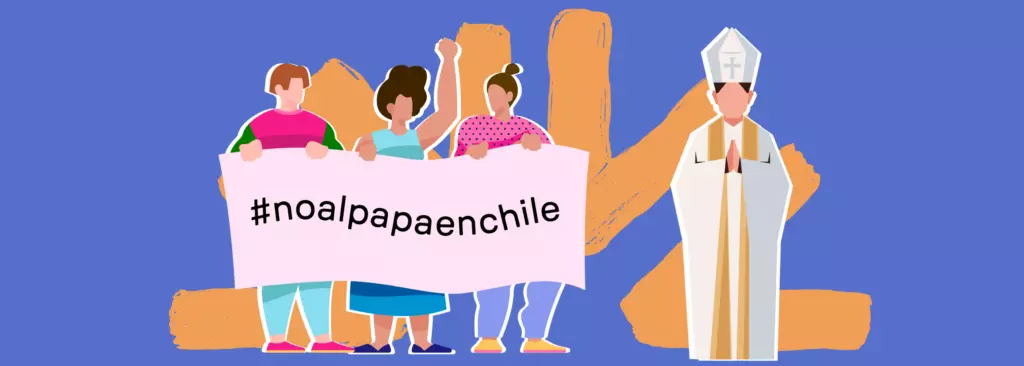
Challenging the Church’s position: The survivor-led movement pressured Church leadership to respond to the abuse, with Pope Francis apologising during his visit to Chile.
In Chile, a predominantly Catholic country where the Church has long held deep social and political influence, practice-based knowledge highlights how the authority of the institution created major barriers to justice for survivors of sexual violence and childhood sexual violence. In this setting, the Catholic Church functioned not only as a religious body but as a powerful moral and political institution, shaping public narratives, legal responses, and social norms related to abuse, accountability, and forgiveness.
Adult survivors, whose voices had long been marginalised, recognised the systemic nature of abuse within the Church and the institution’s persistent cover-ups. Through the Red de Sobrevivientes de Abuso Sexual Eclesiástico de Chile/ Network of Institutional Abuse Survivors of Chile, leaders such as Eneas Espinoza worked with others to document cases, build a comprehensive database of sexual violence, and amplify survivor voices.
What was learned from practice-based knowledge
Survivors documented the patterns and systemic nature of the abuse within the Church. Survivors’ collective documentation revealed that clergy sexual abuse was not the result of isolated incidents but part of a systemic pattern. Practice-based knowledge highlighted recurring tactics the Church used to shield perpetrators including relocating abusive clergy, discouraging complaints, and framing cases as exceptional rather than systemic.
Faith institutions present distinct accountability challenges because of their moral authority, internal governance structures, and social deference, making them a critical but under-examined focus for practice-based learning.
Action:
Building on these insights, survivors organised themselves to demand accountability and reform. They
Survivor strategies were deliberately shaped to confront a faith institution’s moral legitimacy, requiring approaches that challenged institutional authority without being dismissed as attacks on belief itself.
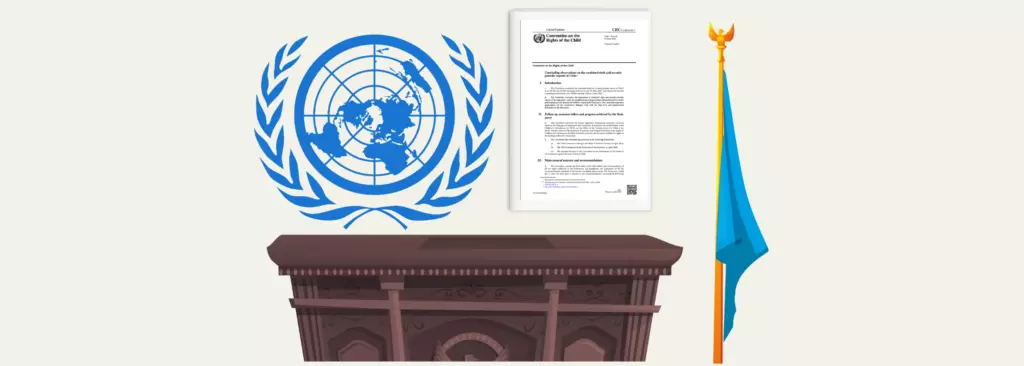
International attention: The UN Committee on the Rights of the Child urged Chile to establish a national inquiry into abuse within the Catholic Church and state-run residential centers in 2022.

Political attention: The Survivors Network pushed for a truth and reparations commission to document the scope of violence. The President of Chile pledged support in 2022 in his election manifesto.
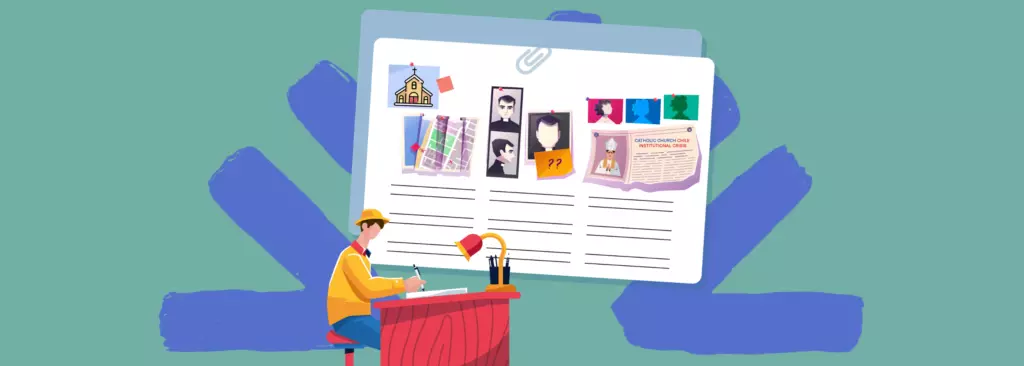
Increased investigations: The number of cases under investigation quadrupled between 2018 and 2019, with 221 accused, including 10 bishops.

Changing media narratives: Survivor-led efforts ensured media coverage framed childhood sexual violence as an institutional crisis, challenging Church narratives of isolated incidents.
Legal reform: After public pressure, Chilean lawmakers abolished the statute of limitations on sexual offences against minors. This allowed survivors to pursue justice, even for historical abuse.
Survivor-led efforts ensured media coverage framed childhood sexual violence as an institutional crisis, challenging Church narratives of isolated incidents.
The survivor-led movement pressured Church leadership to acknowledge and respond to the abuse, with Pope Francis apologising during his visit to Chile.
After public pressure, Chilean lawmakers abolished the statute of limitations on sexual offences against minors, allowing survivors to pursue justice, even for historical abuse.
The number of cases under investigation quadrupled from 36 in 2018 to 166 by May 2019, with 221 accused, including 10 bishops, and 248 victims.
The Survivors Network continued to push for a truth and reparations commission to fully document the scope of violence, with the President of Chile pledging support in 2022 in his election manifesto.
The UN Committee on the Rights of the Child urged Chile to establish a national inquiry into abuse within the Catholic Church and state-run residential centers in 2022.
Hope for a ripple effect: Survivor-led initiatives in Chile and Argentina are hoped to inspire survivors in other Latin American countries to come forward, challenge institutional power, and demand justice.
What didn’t change:
From survivors’ perspectives, recognition of childhood sexual violence as an institutional crisis is only a first step. While the Pope’s apology acknowledged harm, survivors emphasise that symbolic gestures do not constitute accountability.
Many have waited decades for justice, support, and structural change, and cannot afford to rely on long-term promises that remain unfulfilled.
The Survivors Network continues to advocate to fellow survivors, the public, and political leaders that Church authorities maintain significant power to shape narratives, minimise responsibility, and avoid meaningful scrutiny.
According to the Network, this persistent ability to remain largely unchallenged at their core is one of the greatest obstacles faced by activists and by the ordinary justice system. The promised truth and reparations commission has also yet to be established.
Why this matters: The value of practice-based knowledge
This case shows how practice-based knowledge can support accountability in faith institutions, where formal justice mechanisms are often constrained by religious authority, social deference, and institutional resistance. By intentionally sharing their lived expertise, survivors reframed childhood sexual violence in faith-based institutions as an institutional crisis, created pressure for reform, and began dismantling long-standing legal barriers.
Practice-based knowledge isn’t a one-size-fits-all solution, but it provides a framework for understanding systemic harm from those most affected. As you reflect on your own context, consider:
[1] Child Rights International Network (CRIN). (2019). The third wave: Justice for survivors of child sexual abuse within the Catholic Church in Latin America. https://static1.squarespace.com/static/5afadb22e17ba3eddf90c02f/t/5dd5810bebdf5e7dcc00f45e/1574273297394/LATM__English_FINAL.pdf
[2] Child Rights International Network. (2020). Child sexual abuse in the Catholic Church in Chile and Poland. https://home.crin.org/issues/sexual-violence/chile/poland-case-study-clergy-abuse
[3] Ministerio del Interior y Seguridad Pública. (2019). Ley N° 21.160: Declara imprescriptibles los delitos sexuales cometidos contra menores de edad. Diario Oficial de la República de Chile.
https://www.diariooficial.interior.gob.cl/publicaciones/2019/07/18/42406/01/1623065.pdf
[4] Red de Sobrevivientes de Abuso Sexual Eclesiástico de Chile. (2018, August 3). Red de Sobrevivientes de Abusos Eclesiásticos planteó a La Moneda crear comisión de la verdad. El Mostrador. https://m.elmostrador.cl/noticias/pais/2018/08/03/red-de-sobrevivientes-de-abusos-eclesiasticos-planteo-a-la-moneda-crear-comision-de-la-verdad/
[5] Red de Sobrevivientes de Abuso Sexual Eclesiástico de Chile. (2020). Mapa chileno de abusos sexuales y de conciencia cometidos en contextos eclesiásticos. https://www.redsobrevivientes.org/post/mapa-abusos
[6] Red de Sobrevivientes de Abuso Sexual Eclesiástico de Chile & Child Rights International Network (CRIN). (2021). Establecimiento de una Comisión de la Verdad, Justicia y Reparación sobre el abuso infantil en entornos institucionales en Chile. https://www.redsobrevivientes.org/_files/ugd/f3d4e3_1abef7de7a6c4f819e08d244952b458c.pdf
[7] United Nations Committee on the Rights of the Child. (2022). Concluding observations on the combined sixth and seventh periodic reports of Chile. CRC/C/CHL/CO/6-7. https://tbinternet.ohchr.org/_layouts/15/treatybodyexternal/Download.aspx?Lang=en&symbolno=CRC%2FC%2FCHL%2FCO%2F6-7
[8] Zea, T. (2022, April 25). A growing number of clerical sexual abuse survivors are coming forward in Latin America. The World. https://theworld.org/stories/2022/04/25/latin-america-could-be-next-region-expose-sexual-abuses-catholic-church
Do you have a experience with the programs on this website, or any other interventions that aim to address or reduce childhood sexual violence?
Whether you're a advocate, activist, implementer or a participant of a program, we'd love to hear from you!