Public attention
"It’s a Secret: Child Sexual Exploitation in Schools" sparked national and international coverage by over 50 media outlets, with the President of Mexico publicly questioned on the state’s response.
ODI in Mexico exposed how school authorities failed to protect children from childhood sexual violence. This included staff colluding in the abuse of very young children and coordinated cover-ups. In 2021, their work shaped a landmark court case, and contributed to reforms, including school redesign and improved investigative practices.
What these case studies show
These case studies illustrate how practice-based knowledge (PbK) is used in real world settings to improve childhood sexual violence prevention and response. Each case focuses on what practitioners or survivor-led groups learned through action, reflection, and decision-making in their own contexts, and how that knowledge was taken forward.
What these case studies do and do not do
The case studies do not aim to produce generalisable findings. Instead, they offer context-specific insight into how practice unfolds, where challenges emerge, and how actors respond in real time. The absence of evaluation or impact data should not be interpreted as evidence for or against effectiveness.
How to use these insights in your own work
These case studies are intended to support reflection rather than replication. Readers may find them useful for:
Ethical use and limitations
Documenting and sharing PbK requires careful attention to safety, consent, power, and potential harm, particularly when engaging with sensitive experiences of child sexual violence. The ethical principles guiding this work are set out in the PbK Guidance Framework
Scope and limits of the knowledge shared
Each case study reflects the type and depth of knowledge available within its context. Differences in format, detail, and focus reflect variation in purpose, access, and the conditions under which knowledge was documented and shared.
Content warning
Some of the case studies include details of childhood sexual violence. Each case study includes specific content notes to support informed engagement. Please take care of your well-being as you read and step away if needed. For additional support, you may find it helpful to consult the following resources:
Oficina de Defensoría de los Derechos de la Infancia (Office of Advocacy of the Rights of Children (ODI) is a frontline organisation in Mexico that advocates for children’s rights and represents child survivors of sexual violence in courts. A significant part of ODI’s work has focused on cases in schools, where, despite formal oversight, incidents involving multiple perpetrators acting together have repeatedly come to light across several states.
Through years of direct legal representation of child survivors of sexual violence, ODI built a robust body of practice-based knowledge based on case files, courtroom experience, children’s testimonies, and reports from families. By closely examining 45 cases across 12 states between 2017 and 2024, ODI identified recurring patterns of childhood sexual violence in schools as well as state inaction.
What was learned from practice-based knowledge:
Note: This section contains descriptions of childhood sexual violence.
ODI began identifying patterns and systemic gaps:
Public attention: Over 50 media outlets covered the issue, and the Mexican president was publicly questioned on the state’s response.
Redesigning schools: A court order mandated to eliminate hidden spaces within schools so that all rooms have windows.
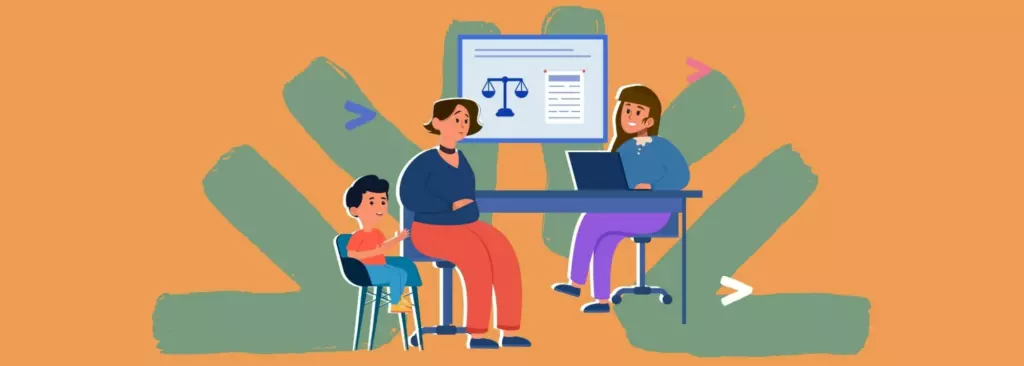
Improved investigative practices: The Attorney General’s Office was required to adopt specialised methods for interviewing young victims and investigating childhood sexual violence cases.

Curriculum integration: Schools were required to include sexual violence education to help students recognise abuse and seek support.
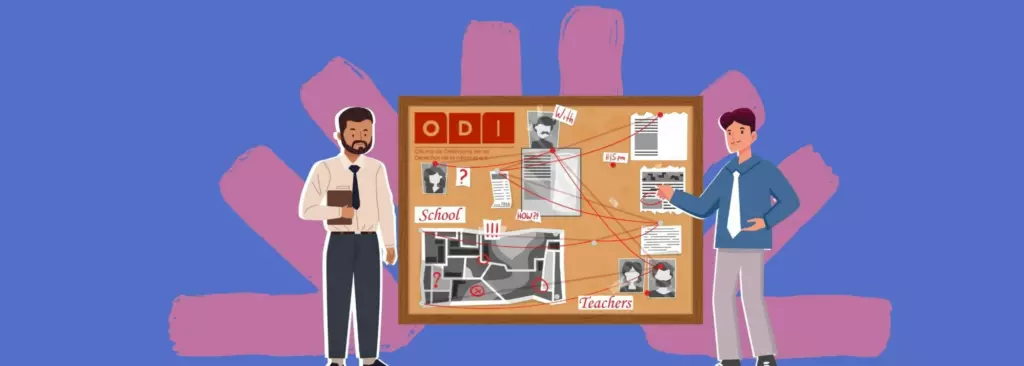
Investigation: The Office of the Attorney General opened a national investigation into all reported cases of childhood sexual violence in schools.
Action:
"It’s a Secret: Child Sexual Exploitation in Schools" sparked national and international coverage by over 50 media outlets, with the President of Mexico publicly questioned on the state’s response.
In 2021 ODI represented a group of children in a high-profile legal case against the Public Education Secretariat.
The Office of the Attorney General opened a national investigation into all reported cases of childhood sexual violence in schools - a key outcome following the publication of ODI’s report.
A court order mandated that the Public Education Secretariat eliminate hidden spaces (such as rooms without windows) within schools and ensure that the visibility of what happens inside classrooms is not obstructed.
The Attorney General’s Office was required to adopt specialised methods for supporting young victims (both boys and girls) to testify within a reasonable time frame.
Schools were required to include sexual violence education to help students recognise childhood sexual violence and seek support.
The judge condemned the Mexican State as jointly liable for the reparation of the damage while sentencing a teacher.
ODI’s frontline legal work shows how knowledge generated through practice can reveal patterns of harm and institutional failure that might otherwise remain hidden. In this case, insights from direct case handling brought to light organised childhood sexual violence in schools and forced national attention on issues the state had ignored.
Practice-based knowledge is not a substitute for formal evidence; the two are most powerful when used together. While research provides depth, validation, and generalisable findings, practice-based insights can highlight urgent gaps, shape the questions that research and investigations must address, and ensure that systemic failures are not overlooked. Together, they strengthen the broader knowledge base.
ODI’s experience shows that insights from practice can be a powerful starting point to uncover systemic gaps in safeguarding. Whether you work in schools, other child care institutions, or in legal and advocacy roles, consider reflecting on the following questions:
For practitioners and school/child-care professionals
For lawyers, advocates, and policy actors
Overall reflective questions
[1] Ansolabehere, K., Azuela, M., Cacho, L., Dresser, D., Gil Antón, M., Guevara, J., Meyer, L., Pérez, J. M., Vázquez, L. D., La Oficina de Defensoría de los Derechos de la Infancia A.C., Griesbach Guizar, M. (Coord.), Mora Lopez, D. (Invest.), Gil Bartomeu, M., Pliego Pérez, Y., Soriano Rodríguez, G., & Espinal Enriquez, J. (2021). “It’s a secret”: Child exploitation in schools. Oficina de Defensoría de los Derechos de la Infancia A.C.
[2] Harris, L. (2024, August 21). “Child testimony is absolutely pivotal”: Margarita Griesbach of Oficina de Defensoría de los Derechos de la Infancia on litigation strategies, communication campaigns, and the importance of child-centered justice systems. Solutions for Ending Childhood Sexual Violence. https://solutionsforcsv.org/resource/conversation-with-margarita-griesbach/
[3] Oficina de Defensoría de los Derechos de la Infancia A.C. (2024, July). “It’s a secret”: Child exploitation in schools. https://dispensariodi.com/wp-content/uploads/2024/08/Report_IT%C2%B4S-A-SECRET_2024.pdf
[4] To Zero. (2024, November). A vision to zero: A roadmap to ending childhood sexual violence. https://to-zero.org/our-vision/our-report
Do you have a experience with the programs on this website, or any other interventions that aim to address or reduce childhood sexual violence?
Whether you're a advocate, activist, implementer or a participant of a program, we'd love to hear from you!