Islamic Relief Worldwide
Islamic Relief brings together faith-based expertise and practice-based knowledge to strengthen safeguarding in emergency settings. They adapt safeguarding approaches to local realities and equip communities to act to keep children safe.
Note on the practice-based knowledge case studies
What these case studies show
These case studies illustrate how practice-based knowledge (PbK) is used in real world settings to improve childhood sexual violence prevention and response. Each case focuses on what practitioners or survivor-led groups learned through action, reflection, and decision-making in their own contexts, and how that knowledge was taken forward.
What these case studies do and do not do
The case studies do not aim to produce generalisable findings. Instead, they offer context-specific insight into how practice unfolds, where challenges emerge, and how actors respond in real time. The absence of evaluation or impact data should not be interpreted as evidence for or against effectiveness.
How to use these insights in your own work
These case studies are intended to support reflection rather than replication. Readers may find them useful for:
- identifying questions to explore within their own practice
- recognising patterns or tensions that resonate with their own settings
- anticipating practical, ethical, or institutional challenges before they arise
Ethical use and limitations
Documenting and sharing PbK requires careful attention to safety, consent, power, and potential harm, particularly when engaging with sensitive experiences of child sexual violence. The ethical principles guiding this work are set out in the PbK Guidance Framework
Scope and limits of the knowledge shared
Each case study reflects the type and depth of knowledge available within its context. Differences in format, detail, and focus reflect variation in purpose, access, and the conditions under which knowledge was documented and shared.
Content warning
Some of the case studies include details of childhood sexual violence. Each case study includes specific content notes to support informed engagement. Please take care of your well-being as you read and step away if needed. For additional support, you may find it helpful to consult the following resources:
- Brave Movement, Practicing Self-Care
- Sexual Violence Research Initiative (SVRI) Dare to Care: Wellness, self and collective care for those working in the Violence against Women (VAW) and Violence against children (VAC) fields
Context
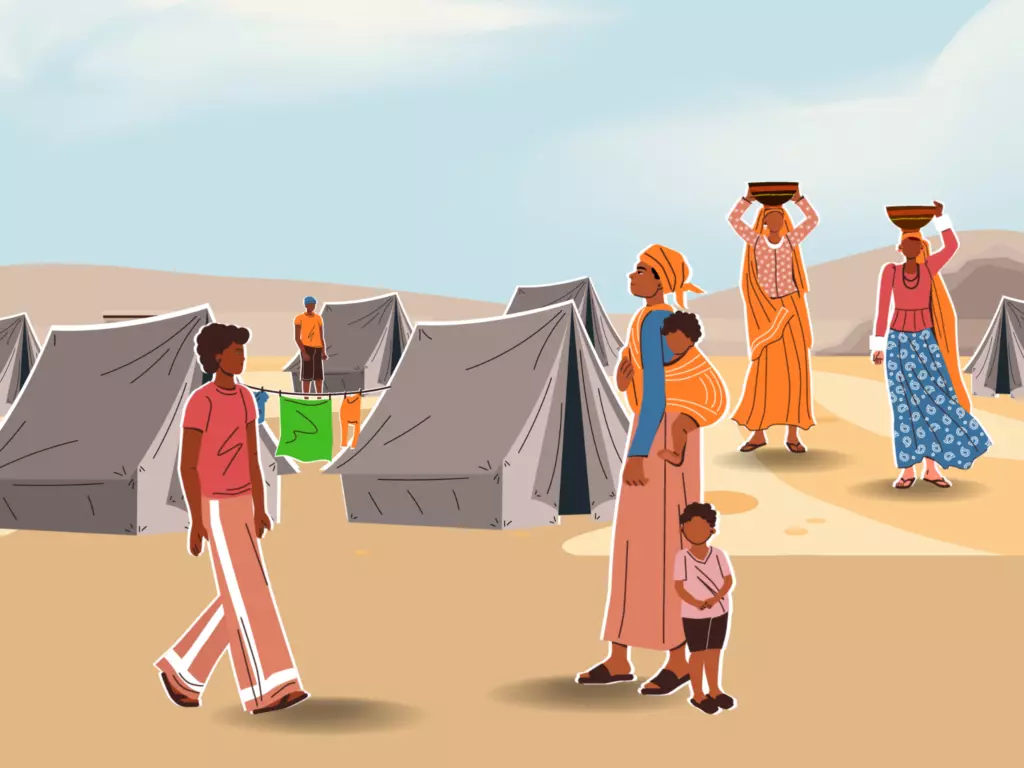
In humanitarian settings, the risk of child protection violations, including childhood sexual violence, increases due to displacement, weak reporting systems, and fractured social structures. [i]
Islamic Relief, a faith-inspired humanitarian relief, development and advocacy organisation, operates in over 40 countries, many of which experience recurring emergencies. In many of these contexts, faith institutions are central to everyday life. Religious leaders shape norms around gender, authority and childhood.

Between 2020 and 2024, Islamic Relief implemented faith-based safeguarding initiatives across multiple emergency contexts in eight countries: Yemen, Malawi, Mali, Sudan, South Sudan, Bangladesh, Ethiopia, and the Philippines. They recognised that safeguarding messages would be legitimate and sustainable only if embedded within local faith and community structures.
A central mechanism within this work was the development of Community Hope Action Teams (CHATs), contextualised for Muslim communities through engagement with Islamic teachings, including the Qur’an and hadith (accounts that describe how the Prophet lived, spoke, and responded in different situations). This model was inspired and built on World Vision International’s Channels of Hope programme.
How Practice-based Knowledge was generated

Islamic Relief accumulated a robust base of knowledge over time, shaped by multiple forms of knowledge emerging directly from practice:
- Frontline expertise: Safeguarding focal points identified gaps between policy and lived realities, particularly around trust and reporting. Practitioners highlighted how gender norms and authority structures shaped both risk and prevention.
- Real-time adaptation: Strategies were continuously adjusted based on resistance, political risk, and community feedback.
- Faith-based interpretation: Religious leaders contributed contextualised understandings of protection rooted in faith teachings.
- Community insight: Community input was taken at various stages. For example, participatory processes revealed barriers to reporting and identified trusted channels.
- Structured process post-implementation: Practice-based knowledge was also further developed post-implementation through structured methods, including focus group discussions with community members, key informant interviews with frontline staff, and cross-country survey data to identify recurring patterns and contextual differences.
All safeguarding teams presented their learnings at an event in 2024, which were then translated into a report in 2024 and built on in a learning paper in 2025.[ii]
What was learnt from Practice-based Knowledge
While safeguarding policies were in place, frontline staff recognised that policy compliance alone was insufficient to shift behaviour or build community trust.
- Reporting mechanisms were perceived by frontline practitioners as being underused, not because they did not exist, but because they were not trusted.
- Safeguarding policies were seen by communities as being insufficient in preventing harm.
- Safeguarding language was not always understood or accepted. In some contexts, it was seen as “Western” or imposed, which created resistance.
- A single, standard safeguarding approach did not work across contexts. What was effective depended on local realities, risks, and relationships.
- Power imbalances exist between aid workers and communities that are reliant on aid for lifesaving resources. Fear of losing access to resources can contribute to silence and underreporting, especially when the abuser is an aid worker.
- Faith leaders hold moral authority in some contexts and were already influencing behaviours, norms, and decision-making. Their role could either reinforce silence or support protection, but they were not always engaged in safeguarding. However, in some contexts, such as Bangladesh, faith leaders don’t hold the same authority.
- Communities possess deep knowledge of local risks, norms, and vulnerabilities, which are often not reflected in formal safeguarding approaches.
- Learning does not happen automatically. Teams need structured spaces to reflect, share challenges, and adapt their approaches.
From insight to action
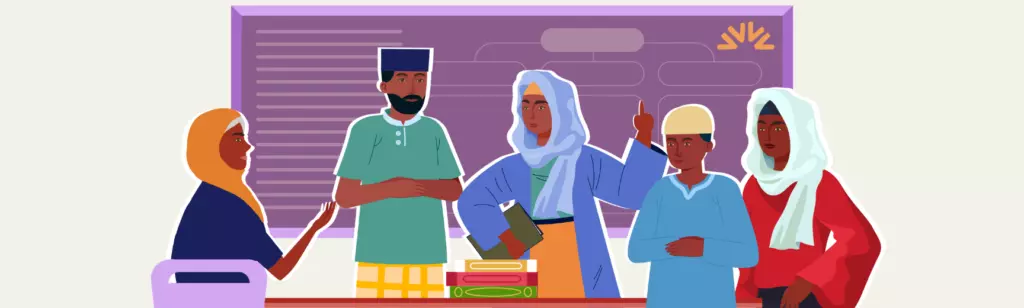
Islamic Relief translated these practice-based insights into community-based safeguarding approaches adapted to emergency contexts. CHATs were established as local safeguarding groups, typically comprising 6-12 community members, including faith leaders, educators, women, children, and protection actors. Members were selected based on their credibility, accessibility, and influence within the community. The CHAT model integrated religious teachings and community engagement to address harmful safeguarding norms. These groups identified risks, facilitated discussions, raised awareness, and supported reporting.
Faith leaders were engaged and trained to connect safeguarding with religious values. Incorporating scripture-based messaging has helped faith-based leaders frame these conversations in ways communities can relate to.
- In Mali, faith leaders were trained in child safeguarding and integrated protection principles into sermons. Safeguarding was framed not as an external imposition, but as consistent with religious values. An imam who participated in the training began speaking about child protection, drawing on Islamic teachings on compassion and justice.
“ I gained a deeper understanding of child rights, signs of abuse, reporting mechanisms and preventive measures. I actively engaged in discussions, shared my insights and collaborated with fellow participants to develop action plans tailored to our respective communities ”
Imam, Ouelessebougou, Mali
- In Malawi, interfaith CHATs were established and included both Muslim and Christian leaders (pastors and imams). Faith leaders play a crucial role in reinforcing scripture-based prevention messages within their religious communities and are perceived as more trustworthy than local administrative leaders, making their involvement critical to the legitimisation of child protection efforts.
- In Ethiopia, faith leaders began to frequently raise awareness on protection issues. Religious leaders have been advocating for eradicating child marriage and female genital mutilation during Friday sermons, highlighting how it violates both the Qur’an and hadith.
Safeguarding language was adapted to local contexts.
- In Yemen, practitioners faced resistance from authorities who viewed safeguarding and gender discussions as Western ideological impositions. Engagement was further constrained by strict oversight, where any form of community gathering required prior approval from authorities. Staff adapted language, reframing “sexual exploitation and abuse” as “harm or coercion of any kind” and the work as “do no harm” or “rights” and working through existing community structures rather than forming new CHATs. This adaptive decision-making reflected real-time risk analysis.
- In South Sudan, teachers who participated in CHATs integrated prevention awareness into educational programmes.
- In the Philippines, a train-the-trainer approach cascaded safeguarding knowledge through religious leaders, school heads, and local government representatives, leading to community-level safeguarding rollouts.
Safeguarding was integrated into organisational systems, including recruitment, contracts, and programme monitoring, helping build safeguarding-aware organisational cultures. Country teams also strengthened recruitment practices, integrated safeguarding into risk assessments, embedded safeguarding indicators into log frames, and worked toward building safeguarding-aware organisational cultures.
In Gaza, operational constraints were even more severe, with activities suspended at times due to the context, further limiting the ability to implement community engagement and safeguarding initiatives.
Impact

In Ethiopia’s Afar region, internal evaluation reports found that faith leaders contributed to shifting community perceptions.
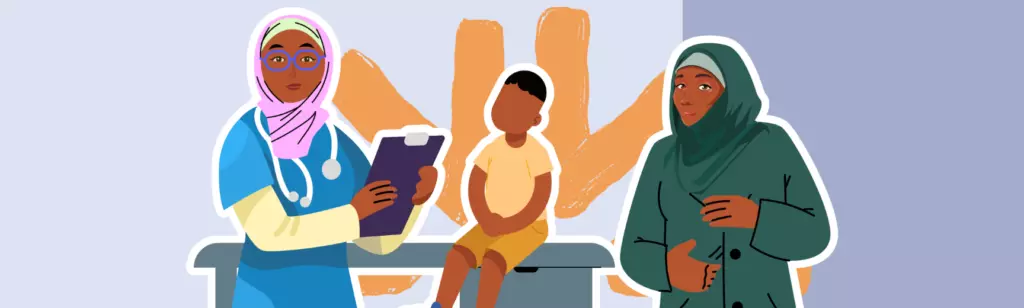
In Mali, healthcare workers referred suspected cases of child abuse and domestic violence to CHAT members.

In politically sensitive contexts such as Yemen, reframing language enabled continued safeguarding engagement without exposing staff or participants to additional risk.
Across participating countries, Islamic Relief’s faith-sensitive safeguarding approaches were associated with perceived shifts in behaviours, norms, and protection systems. These impacts were observed through a combination of internal endline evaluations, project assessments, focus group discussions, key informant interviews, and cross-country survey data.
- Faith-led engagement resulted in greater community acceptance of safeguarding: For example, in Ethiopia’s Afar region, internal evaluation reports found that faith leaders contributed to shifting community perceptions and increasing reporting by helping communities distinguish between religious teachings and cultural practices. This clarification shifted norms around what is acceptable, increased recognition of abuse, and supported greater reporting of child protection concerns.
- Increased awareness and use of reporting mechanisms: For example, in Mali, healthcare workers referred suspected cases of child abuse and domestic violence to CHAT members, who provided support and linked cases to formal protection or legal systems.
- Context-adapted approaches enabled continued safeguarding engagement in high-risk settings: In politically sensitive contexts such as Yemen, reframing language enabled continued safeguarding engagement without exposing staff or participants to additional risk.
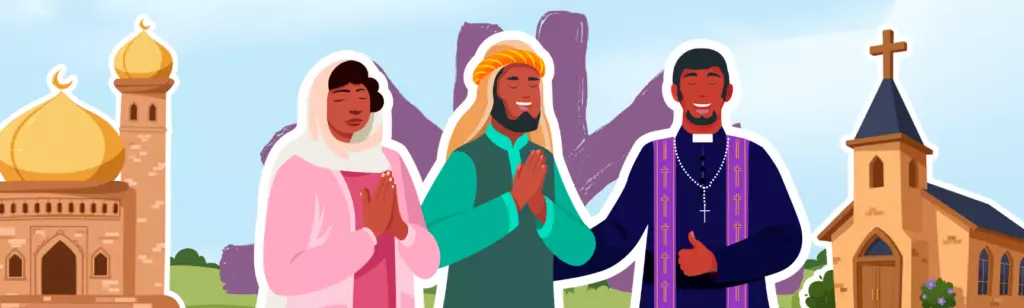
In Malawi, where Muslim and Christian leaders jointly advocated for child protection.

In South Sudan, community members reported that CHAT-led awareness, including school-based engagement by teachers, contributed to increased understanding of abuse.
- Interfaith collaborations increased the legitimacy of safeguarding: In Malawi, where Muslim and Christian leaders jointly advocated for child protection, the team reported improved legitimacy and sustainability of safeguarding work.
- Cross-sector engagement was associated with reductions in harmful practices: In South Sudan, community members reported that CHAT-led awareness, including school-based engagement by teachers, contributed to increased understanding of abuse. Some focus group participants also described perceived reductions in child abuse and early and forced marriage.
- Dedicated safeguarding resources enabled deeper and more sustained engagement: Country offices reported that stand-alone safeguarding funding enabled deeper engagement, more comprehensive training, and clearer accountability than when safeguarding was included within other projects.
Why this matters: the value of Practice-based Knowledge
This initiative shows that safeguarding in emergency contexts is not primarily a technical or policy challenge, but a relational and contextual one. Practice-based knowledge revealed that:
- Legitimacy, not just compliance, determines whether safeguarding is acted upon
- Faith and community structures are critical sites of both risk and prevention
- When faith leaders integrate safeguarding and scripture, it can help strengthen prevention
- Language and framing shape whether safeguarding is accepted or resisted
- Power dynamics shape both vulnerability and reporting and must be actively addressed
- Sustainable safeguarding requires shifts in both community norms and organisational culture
By grounding safeguarding in lived realities and existing systems of authority, practitioners were able to move from policy to practice.
If you're working in a similar context
The Islamic Relief experience highlights practice-based insights that may prompt reflection in other settings. These are not models to copy, but questions to consider:
- Legal obligations: How do community-based reporting pathways connect to formal child protection and legal systems, and where are the gaps?
- Faith authority: Which faith leaders or institutions hold moral authority in your context, and how might their involvement strengthen child protection legitimacy?
- Language and resistance: Are safeguarding terms perceived as imposed or foreign, and how might you adapt language while maintaining principles?
- Power dynamics: How do patriarchal norms or hierarchical structures shape vulnerability and reporting?
- Organisational culture: Is safeguarding treated as compliance, or as part of everyday decision-making and leadership behaviour?
- Community reporting: Are your reporting mechanisms accessible to children, people with disabilities, and marginalised groups?
- Emergency contexts: How are heightened risks during crises integrated into programme design and risk assessment?
Sources
Bushra Rehman
Islamic Relief Worldwide
Islamic Relief Regional Offices
For additional questions or collaboration, please get in touch with the knowledge creator at bushra.rehman@irworldwide.org
[1] Islamic Relief Worldwide (2024). Establishing Community and Faith-Based Approaches to Safeguarding in Emergency Contexts – Lessons Learned. https://islamic-relief.org/wp-content/uploads/2024/09/Establishing-Community-and-Faith-Based-Approaches-to-Safeguarding-in-Emergency-Contexts.pdf
[2] Islamic Relief Worldwide. (2025). A snapshot of Islamic Relief’s faith-sensitive approach to protection and inclusion: Creating community hope action teams – Examples from Mali, Malawi, South Sudan and Ethiopia. https://islamic-relief.org/wp-content/uploads/2025/04/IRW-ProtectionAndInclusion.pdf
[3] Islamic Relief Worldwide. (2025). Annual report and financial statements 2024. https://islamic-relief.org/wp-content/uploads/2025/07/IRW-AR2024-FINAL.pdf
[4] World Vision International. (n.d.). Channels of Hope. https://www.wvi.org/faith-and-development/channels-hope
[i] See, ECPAT International. (2024). A call for nuanced, contextualised and coordinated responses to complex manifestations of sexual exploitation of children in humanitarian contexts. Case studies of Ethiopia, Kenya and the Kurdistan Region of Iraq. https://ecpat.org/wp-content/uploads/2024/05/Child-Sexual-Exploitation-in-Humanitarian-Contexts.pdf
Harrison, S., Chenhall, R. D., Block, K., Rashid, S. F., & Vaughan, C. (2025). The sexual abuse of adolescent boys in humanitarian emergencies: A qualitative study of how international humanitarian organisations are responding. Child Abuse & Neglect, 163, Article 107327.https://doi.org/10.1016/j.chiabu.2025.107327Piolanti, A., Schmid, I. E., Fiderer, F. J., Ward, C. L., Stöckl, H., & Foran, H. M. (2025). Global prevalence of sexual violence against children: A systematic review and meta-analysis. JAMA Pediatrics. 179(3), 264-272. https://doi.org/10.1001/jamapediatrics.2024.5326
[ii] Islamic Relief Worldwide. (2025). A snapshot of Islamic Relief’s faith-sensitive approach to protection and inclusion: Creating community hope action teams – Examples from Mali, Malawi, South Sudan and Ethiopia. https://islamic-relief.org/wp-content/uploads/2025/04/IRW-ProtectionAndInclusion.pdf
The work in Palestine had to be paused due to the humanitarian crisis, as life-supporting assistance took priority. In Bangladesh, Palestine, and Yemen, faith-based actors were not explicitly engaged.
Tags
Share your story!
Do you have a experience with the programs on this website, or any other interventions that aim to address or reduce childhood sexual violence?
Whether you're a advocate, activist, implementer or a participant of a program, we'd love to hear from you!