Increased visibility and accountability within G7
The #BeBrave G7 Scorecard publicly documented gaps between commitments and action, drawing attention to legal, policy, and funding failures across G7 countries.
Using practice-based knowledge grounded in lived expertise, the Brave Movement works to strengthen governments’ accountability for ending childhood sexual violence. The Movement has influenced international policy discussions and shaped how governments are assessed on prevention and response.
What these case studies show
These case studies illustrate how practice-based knowledge (PbK) is used in real world settings to improve childhood sexual violence prevention and response. Each case focuses on what practitioners or survivor-led groups learned through action, reflection, and decision-making in their own contexts, and how that knowledge was taken forward.
What these case studies do and do not do
The case studies do not aim to produce generalisable findings. Instead, they offer context-specific insight into how practice unfolds, where challenges emerge, and how actors respond in real time. The absence of evaluation or impact data should not be interpreted as evidence for or against effectiveness.
How to use these insights in your own work
These case studies are intended to support reflection rather than replication. Readers may find them useful for:
Ethical use and limitations
Documenting and sharing PbK requires careful attention to safety, consent, power, and potential harm, particularly when engaging with sensitive experiences of child sexual violence. The ethical principles guiding this work are set out in the PbK Guidance Framework
Scope and limits of the knowledge shared
Each case study reflects the type and depth of knowledge available within its context. Differences in format, detail, and focus reflect variation in purpose, access, and the conditions under which knowledge was documented and shared.
Content warning
Some of the case studies include details of childhood sexual violence. Each case study includes specific content notes to support informed engagement. Please take care of your well-being as you read and step away if needed. For additional support, you may find it helpful to consult the following resources:
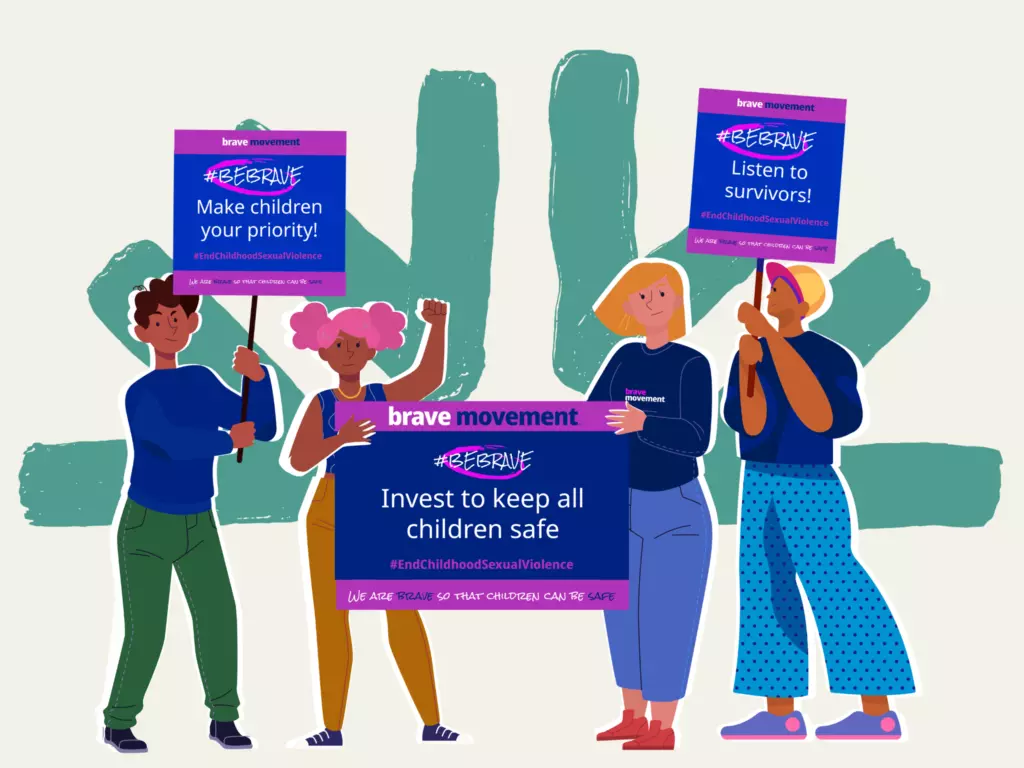
The Brave Movement emerged in response to persistent gaps between government commitments to address childhood sexual violence and the realities experienced by survivors. While childhood sexual violence is widely acknowledged as a global human rights crisis, survivor perspectives have historically been marginalised in policy design, monitoring, and accountability processes.
The Brave Movement brings together survivor advocates and allies from multiple countries to collectively engage with global and national policy spaces, including G7[1] processes and Council of Europe mechanisms, with the aim of ensuring that survivor expertise informs how governments prevent, respond to, and are held accountable for childhood sexual violence.

"There is hope" – Brave Movement
How practice-based knowledge was gathered:
The Brave Movement’s practice-based knowledge is generated through sustained survivor-led advocacy, reflection, and engagement with policy processes. Survivor advocates drew on their lived experiences of navigating justice systems, support services, and institutional responses to childhood sexual violence to identify recurring barriers and priorities.
This knowledge was consolidated through survivor consultations, analysis, and iterative engagement with advocacy processes. This includes the co-creation of the Brave G7 Call to Action -a survivor-led accountability framework to translate survivors’ lived expertise into specific, measurable expectations for governments. Survivor-informed policy indicators were shaped by survivors’ experiences of delayed justice, exclusion from decision-making, fragmented national responses, and insufficient investment in child protection.
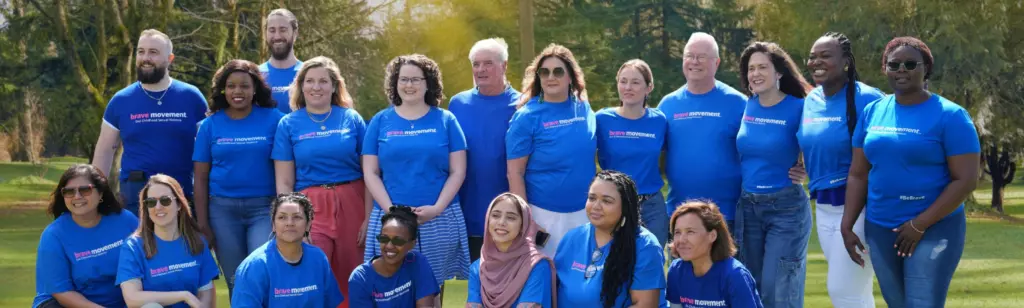
The Brave Movement translated these practice-based insights into concrete advocacy tools and actions:
The #BeBrave G7 Scorecard publicly documented gaps between commitments and action, drawing attention to legal, policy, and funding failures across G7 countries.
Several G7 countries demonstrated movement toward survivor participation mechanisms, including Germany’s statutory National Survivors Council, Canada’s establishment of a Survivors Council, France’s public commitment to create one following survivor advocacy, and the UK’s ongoing efforts to establish its National Survivors Council.
Lived experience and expertise contributed to renewed focus on online safety legislation, statutes of limitations, and survivor participation within G7 policy discussions.
What didn't change:
What was learned from practice-based knowledge
Survivor-led PbK surfaced several systemic gaps across G7 countries:
Why this matters: the value of practice-based knowledge
The Brave Movement demonstrates how survivors’ lived expertise can function as practice-based knowledge when it is systematically applied to shape policy frameworks and accountability mechanisms. By translating survivor insights into indicators, scorecards, and governance tools, the Movement shows how practice-based knowledge can surface systemic failures that are often obscured by high-level commitments.
Practice-based knowledge does not replace research or formal evidence. Instead, survivor-led practice-based knowledge helps define what should be measured, where accountability is missing, and which questions research and policy must address to avoid reproducing harm.
For survivor advocates and civil society organisations
For policymakers and international actors
Overall reflective questions
The Brave Movement and survivor advocates engaged across G7 and international policy processes.
Sources
[1] Brave Movement. (2025, June). Ending childhood sexual violence: #BeBrave G7 Scorecard. https://cdn.bravemovement.org/files/Ending_Childhood_Sexual_Violence_G7_Scorecard_2025.pdf
[2] Brave Movement. (2025, June 25). 15 years of the Lanzarote Convention: Hope, dignity and progress. https://www.bravemovement.org/blog/15-years-of-the-lanzarote-convention-hope-dignity-and-progress
[3] Brave Movement. (2025). Survivor Council Guide: Practical guide with expertise from survivor advocates. https://cdn.bravemovement.org/files/Survivor-Council-Guide-English.pdf
[4] Ligiero, D., De Angulo, B., & Gatera, G. (2024). Prevention, healing, and justice: A survivor-centred framework for ending violence against women and children. The Lancet, 403(10427), 595-597. https://doi.org/10.1016/S0140-6736(23)02518-7
Do you have a experience with the programs on this website, or any other interventions that aim to address or reduce childhood sexual violence?
Whether you're a advocate, activist, implementer or a participant of a program, we'd love to hear from you!