Stronger ability to recognize inappropriate requests.
Students' knowledge was significantly improved by the program.
This program was implemented in a private Muslim school and a public school in Indonesia to help first-grade primary school students build body-safety knowledge and self-protection skills related to sexual violence prevention. Both schools used the national curriculum, while the Muslim school also implemented Muhammadiyah-based education, making Islamic values central to the school's culture.
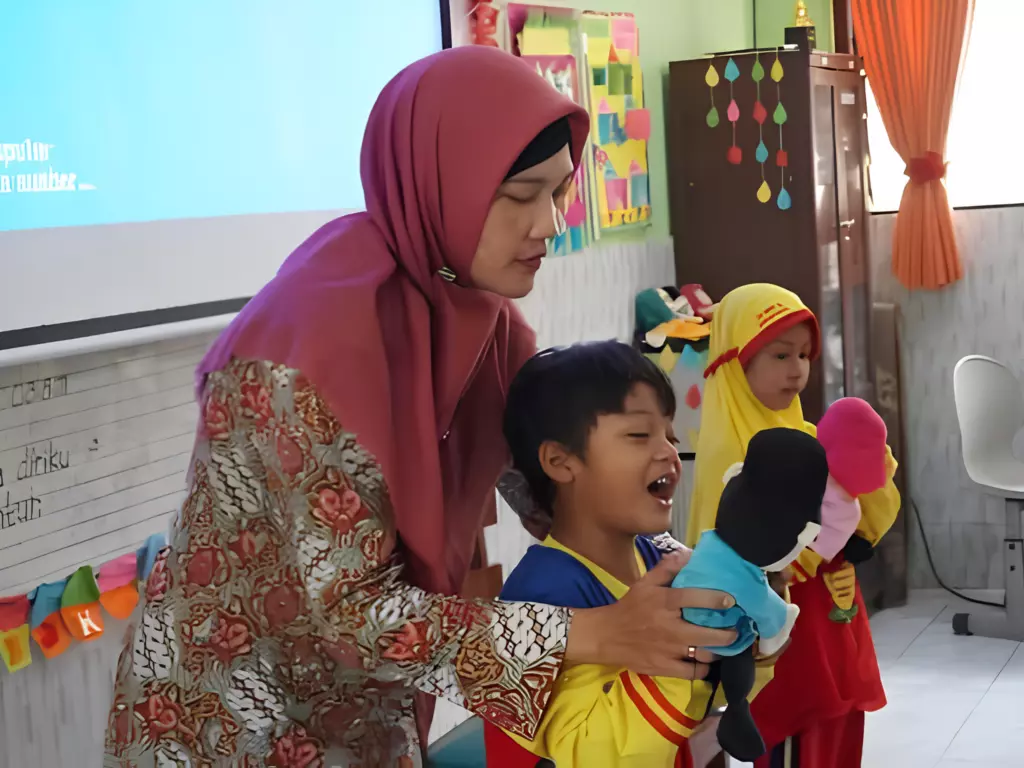
Photo credit: Muhamad Taufik Hidayat, M.Pd.
Integrating guided modules on preventing childhood sexual violence into school curricula has led to positive results in multiple countries and at all schooling levels from pre-school to high school. Sessions typically involve peer learning, role-play, critical reflection, and other interactive strategies. Content on preventing childhood sexual violence may be embedded into different types of programs or approaches in schools.
Effectiveness of intervention type |
Effective |
|
INSPIRE Pillar |
Education and life skills |
|
Evidence type |
Quasi-experimental study |
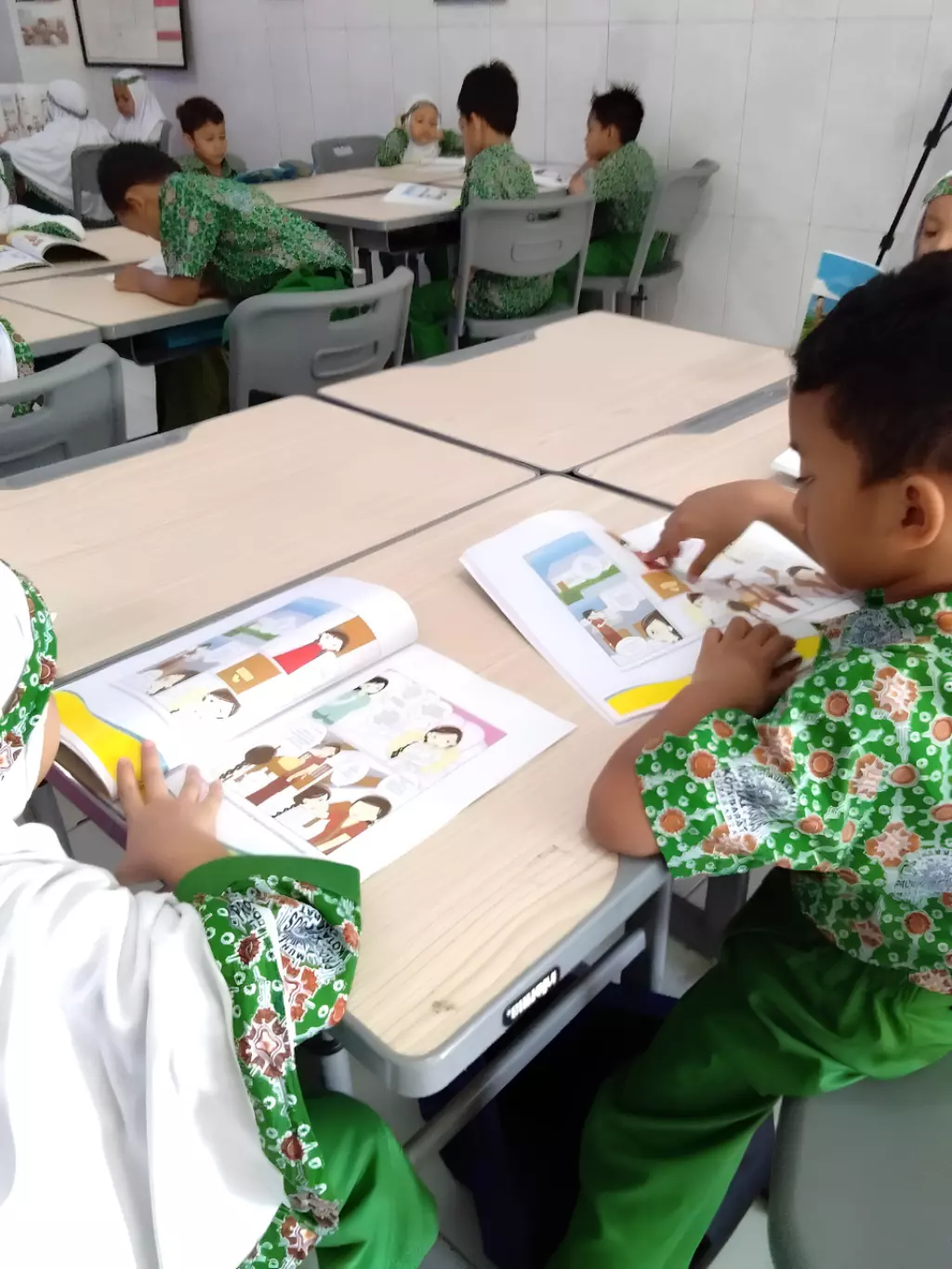
School children taking part in the program in a private Muslim school in Indonesia. Photo credit: Muhamad Taufik Hidayat, M.Pd.
According to Indonesia’s 2024 National Survey of Life Experiences of Children and Adolescents (SNPHAR), 50.7% of children and adolescents aged 13-17 had experienced at least one form of violence (physical, emotional, or sexual) in their lifetime.
The survey further highlighted that 9% of children and adolescents aged 13-17 had experienced sexual violence. Among boys and girls ages 13-17, the most common perpetrators of the most recent incident of sexual violence were peers/friends (49.6%), followed by romantic partners (13.2%). Of those who experienced sexual violence, only 0.5% of boys and 4.4% of girls reported receiving help from support services [1].
Research in Indonesia suggests that cultural norms surrounding sexuality may discourage children from disclosing experiences of sexual violence. Discussions about sexual anatomy and the use of anatomically correct terms for sexual organs are often considered sensitive or inappropriate within some communities. Additionally, some parents and community members express concern that introducing these topics at an early age may increase children's curiosity about sexuality [2].
What it is and how it works
P3SBS developed by researchers at Universitas Muhammadiyah Surakarta, was implemented in a private Muslim school and a public school in Surakarta, Indonesia, in 2019 to help first-grade primary school students build body-safety knowledge and self-protection skills related to sexual violence prevention. Both schools used the national curriculum, while the Muslim school also implemented Muhammadiyah-based education, making Islamic values central to the school's culture.
The program used behavioral strategies to teach body-safety rules, such as saying no, calling for help, escaping, and telling trusted adults. P3SBS also taught children to identify private body parts and understand safe and unsafe touch [2].
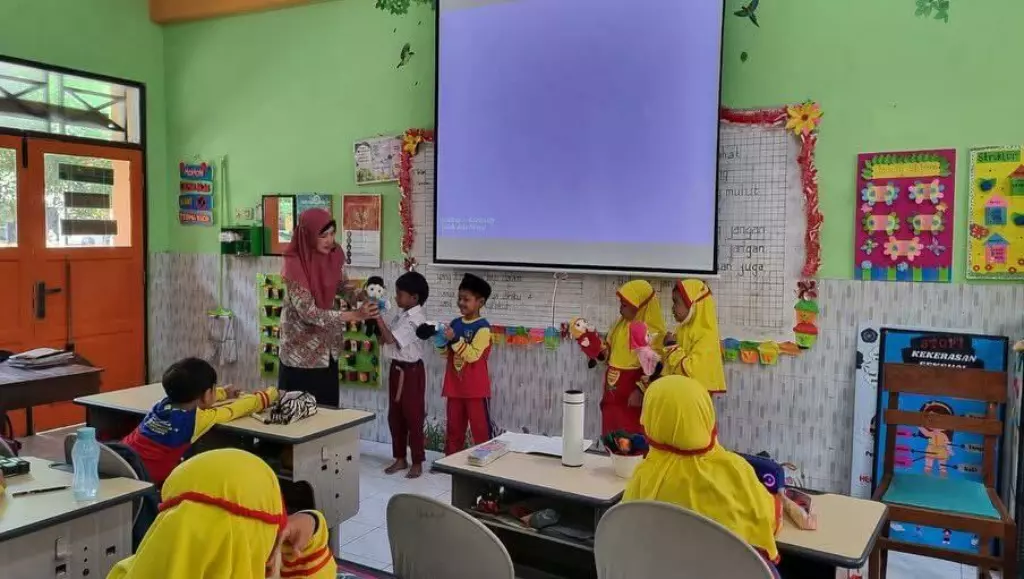
School children taking part in the program in a private Muslim school in Indonesia. Photo credit: Muhamad Taufik Hidayat, M.Pd.
The program was delivered by parents at home and by teachers at schools as part of the school curriculum. Before the P3SBS program was delivered to children, two training sessions were provided for both teachers and parents over a week-long period on sex education and on how to deliver the P3SBS content.
Parents used a pocketbook to teach their children at home about private body parts, correct anatomical terms, gender differences, and ways to protect themselves from sexual violence. Teachers then checked children’s understanding at school by asking questions based on activities in the teacher’s guidebook [2].
The content and delivery of the material were adjusted to local cultural and religious values, particularly regarding discussions of sexual anatomy and terminology. The training drew on Islamic teachings to support the use of clear, appropriate biological terms, including vagina and penis, rather than euphemisms. This was an important component of the training because, in the community, these terms are often replaced with euphemisms, for example, referring to the vagina as apem and the penis as burung (bird).
Other Islamic principles related to teaching children about sexuality were also incorporated into the training. These included guidance for children that they should sleep separately once they reach puberty and should learn to care for and protect their private parts.
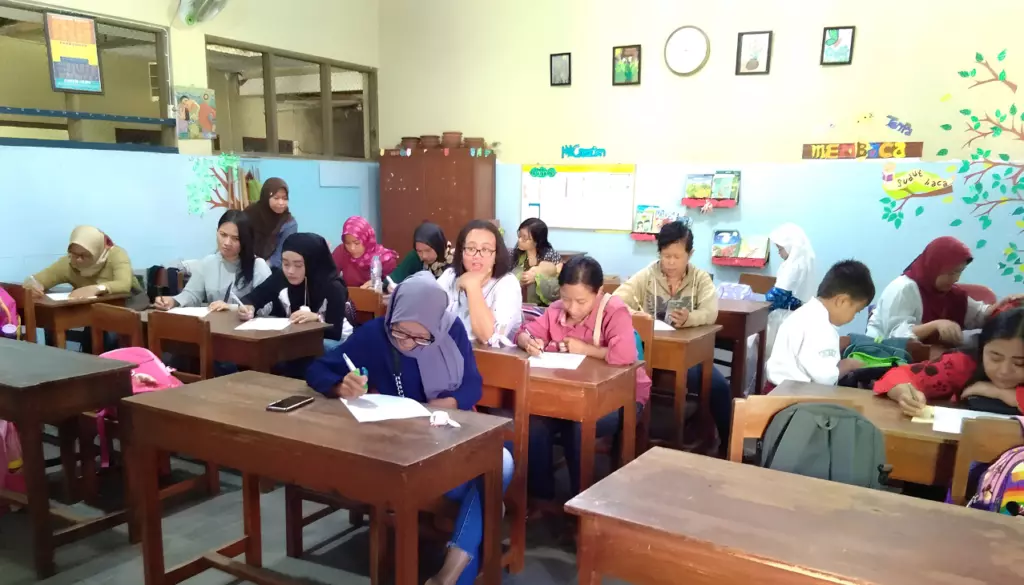
School children taking part in the program in a public school in Indonesia. Muhamad Taufik Hidayat, M.Pd.
To determine the impact of P3SBS, the implementers conducted a quasi-experimental study from April to October 2019 using a pre- and post-test design with a control group. The participants included 110 first-grade students (55 in the intervention group and 55 in the control group, 51 boys and 59 girls). Data were collected twice from the experimental and control groups: one week prior to and one week after the intervention. Children were interviewed individually using the ‘What If’ Situation Test (WIST) [2], which presented hypothetical situations involving potentially unsafe or inappropriate interactions, such as being asked to remove their clothes or having their chest or genitals touched.
Results of this evaluation indicate:
Students' knowledge was significantly improved by the program.
The program helped engage parents and teachers in age-appropriate sex education and body-safety learning.
The program was tailored to and implemented in both a secular and an Islamic school.
It was adapted to upper-grade students (Grade 5) as a curriculum-integrated sexual harassment prevention program.
The program included the development of digital media, including a child-focused sex education application, to support implementation.
[1] Ministry of Women's Empowerment and Child Protection. (2024). 2024 National Survey of Life Experiences of Children and Adolescents. https://ppid.kemenpppa.go.id/uploads/informasi/publik/1747211993.pdf
[2] Wulandari, M. D., Hanurawan, F., Chusniyah, T., Hidayat, M. T., Rahmawati, F. P., Sayekti, I. C., & Bakhtiar, F. Y. (2022). Integration of a Sexual Abuse Prevention Programme in the First-Grade Indonesian Curriculum to Improve Children's Self-Protection. Child Abuse Review, 31(2). https://doi.org/10.1002/car.2723
Special thanks to Muhamad Taufik Hidayat, M.Pd. for co-developing this case study.
For more information on this case study, you can reach out to Muhamad at mt.hidayat@ums.ac.id.
Do you have a experience with the programs on this website, or any other interventions that aim to address or reduce childhood sexual violence?
Whether you're a advocate, activist, implementer or a participant of a program, we'd love to hear from you!