Significant reduction
in the percentage of students reporting feeling unsafe at school, with a decrease from 13% to 2%.
Preventing school-related gender-based violence through life skills training for students and capacity building for teachers and school leaders in 200 schools in the Kenema and Kono districts, Sierra Leone.
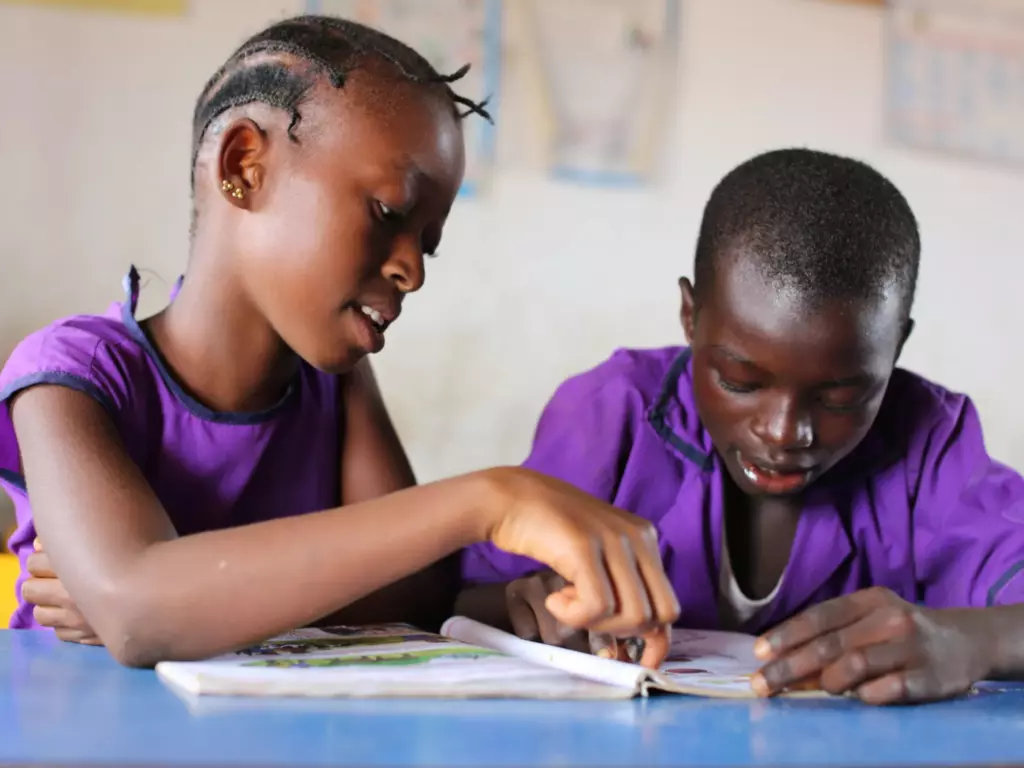
Credit: UNICEF Sierra Leone/2022/Mutseyekwa
Child safeguarding is an organization’s responsibility to make sure their staff, operations, and programs do no harm to children and do not expose them to the risk of harm or abuse. This means doing all they can to prevent exploitation and abuse, and if abuse occurs, to respond appropriately. Adopting child safeguarding measures to prevent sexual violence within organizations is considered standard practice and, for many organizations, mandatory.
Effectiveness of intervention type |
Needs more evidence |
|
INSPIRE Pillar |
Safe environments |
|
Evidence type |
Mixed-method study |

Credit: UNICEF Sierra Leone/2017/Mason
Sierra Leone has made substantial progress in guaranteeing safe access to education for all children and addressing school-related gender-based violence (SRGBV). In 2018, the country introduced the Free Quality School Education initiative, ensuring free admission and tuition for all children in government-approved schools [2].
In 2023, the government prohibited corporal punishment of children in schools. Furthermore, Sierra Leone is a signatory to the Freetown Manifesto for Gender-Transformative Leadership in Education, which promotes gender equality in schools. In 2025, Sierra Leone, together with ten other countries, launched the International Taskforce to End School Violence, reaffirming its commitment to making violence prevention in and around schools a political priority.
Despite these advances, violence against girls and women remains a persistent challenge in the country. According to the 2019 Demographic and Health Survey (DHS), 61% of women aged 15-49 have experienced physical violence by anyone since age 15, and 7% have experienced sexual violence. A 2010 national school-based survey found that two in three girls in primary and secondary school (ages 13 and older) had experienced any sexual violence, while 18% had experienced rape. For 30% of girls, the experience of sexual violence occurred at school [3].
Limited resources and entrenched harmful gender norms are still impediments to providing safe and enabling learning environments for all children and adolescents.
The United Nations Girls’ Education Initiative (UNGEI) and UNICEF Sierra Leone implemented the ‘End SRGBV’ program in partnership with the Ministry of Basic and Senior Secondary Education and the International Rescue Committee from April 2023 to April 2024. The partners scaled up a pilot program from 21 to 200 schools in the Kenema and Kono districts, reaching 147,246 children (54% girls) and approximately 9% of the national population. These two districts were jointly selected by the Ministry of Basic and Secondary Education (MBSSE) and UNICEF based on multiple data sources, including national statistics, sectoral assessments, and service-delivery reports, which highlighted high prevalence of gender-based violence, child marriage, and population vulnerability, alongside existing local capacity for implementation.
The program adopted UNGEI's Whole School Approach, and included [2, 4]:
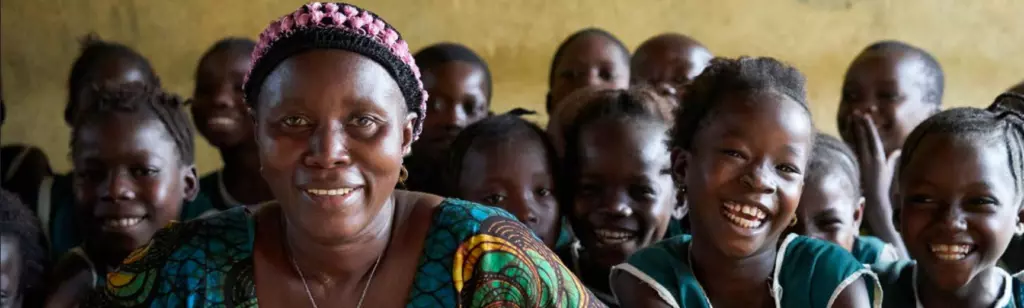
Credit: UNGEI, A whole school approach to prevent school related gender-based violence: Minimum standards and monitoring framework report
To determine the impact of the ‘End SRGBV’ program in Sierra Leone, the implementers used a mixed-methods evaluation on key program-linked metrics such as students’ feelings of safety, reports of SRGBV incidents, and changes in attitudes toward gender and corporal punishment.
The evaluation demonstrated positive changes among students and school communities [2,3] after the program compared with the baseline assessment, including:
in the percentage of students reporting feeling unsafe at school, with a decrease from 13% to 2%.
in experiences of sexual violence in the past month.
around rape. The belief that ‘rape’ should be kept secret fell from 31% to 9%.
in reporting harm. Students’ comfort with reporting abuse or harm increased from 71% to 97%.
among students increased from 5% to 27%.
in students’ experiences of SRGBV in the past 12 months (from 99% to 91%).
of students who believed that teachers should be allowed to use corporal punishment (from from 51% to 17%).
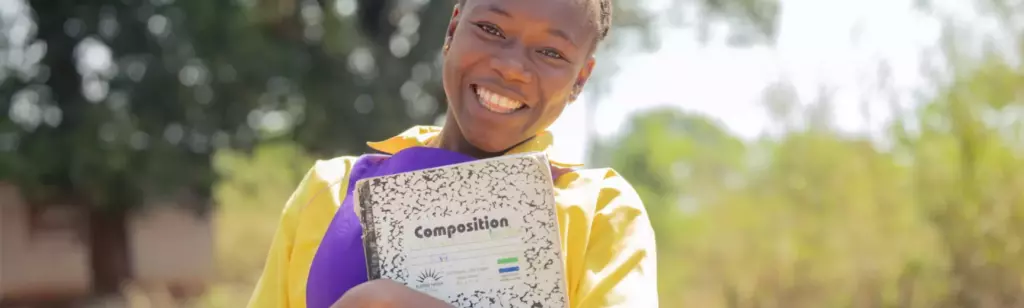
Credit: UNICEF Sierra Leone

The End SRGBV program reduced experiences of SRGBV among students, including sexual violence. It created a robust framework for addressing SRGBV in Sierra Leone. Thanks to enhanced coordination, better data, increased stakeholder capacity, and improved community engagement, it addressed the immediate needs and established a robust foundation for long-term SRGBV prevention and response, strengthening Sierra Leone’s education system to prevent and respond to SRGBV sustainably.
The national coordination mechanism led by the MBSSE has streamlined efforts to address SRGBV. With the mapping of existing interventions and actors, this mechanism has helped minimize duplication and foster collaboration among government ministries and stakeholders. Regular coordination meetings with set agendas have enabled effective progress tracking, experience sharing, and collaborative problem-solving.
The capacity development of key stakeholders, including parents, community structures, teachers, Family Support Units, students, and school leaders on the Teacher Code of Conduct, positive discipline methods, and the GBV referral protocol enabled an effective SRGBV response and promoted positive behavioral practices.
This initiative has been sustainably followed by a systems-level support to MBSSE through UNICEF and the Global Partnership for Education under the Safe Learning Technical Assistance Initiative (2024-2026).
[1] UNESCO & The United Nations Girls’ Education Initiative (UNGEI) (2015). School-related gender-based violence is preventing the achievement of quality education for all.
[2] The United Nations Girls’ Education Initiative (UNGEI) (2024).School-Related Gender Based Violence: Case studies from Mozambique, Sierra Leone and Zimbabwe.
[3] Concern Worldwide (2011). School-related gender-based violence in Sierra Leone.
[4] The United Nations Girls’ Education Initiative (UNGEI) (2025). Addressing school-related gender-based violence in Sierra Leone.
Special thanks to Zeynep Aydemir Koyuncu, Programme Manager at UNGEI, and Florence Roberts, Education Officer at UNICEF Sierra Leone, for co-developing this case study.
For more information on this case study, you can reach out to contact@ungei.org.
Do you have a experience with the programs on this website, or any other interventions that aim to address or reduce childhood sexual violence?
Whether you're a advocate, activist, implementer or a participant of a program, we'd love to hear from you!